
Placement and compliance
Where to Legally Mount a Phone in an Australian Car

The short answer: is a windscreen phone mount legal?
A legal windscreen phone mount sits low and out of your forward view. The centre stack, the lower dash, the driver-side outboard vent and the extreme bottom corner of the windscreen all keep the road visible. The middle of the glass at eye level does not. Road rules are state-based, so check your state's rules before you commit.
What the rules actually ask of a mount
Three rules in the Australian Road Rules model framework do the work here, and each state enacts its own version.
- Rule 300 requires that a phone used while driving sits in a mounting commercially designed and manufactured for that purpose, and that the mounting is securely affixed to the vehicle. A phone wedged in a cup holder, taped to a vent or sitting on your knee does not meet that test.
State by state: every state and territory writes its own version of Rule 300, and the numbering, the exemptions and the novice driver conditions are not identical. NSW, Victoria and Queensland also run automated phone detection cameras. Check your state's road authority for the current wording before you choose a position on the dash or the glass.
- Rule 297(2) requires a clear view of the road and traffic ahead, behind and to each side. An obstruction offence can stand on its own, regardless of whether the phone was being touched.
- Rule 299 covers visual display units. Navigation and dispatch displays are treated as driver aids. Video is not.
Novice drivers are the sharpest edge. Learner, P1 and P2 holders in the major states are banned from using phone functions at all, including navigation and audio streaming, even with the phone locked into a compliant cradle. Enforcement has also moved on: more than 330,000 fines were issued nationally in 2024 for illegal phone use, with roughly 88 per cent generated by automated detection cameras, and the detection algorithms are tuned to spot a hand on a device.
The 11 m test: how sightline is actually measured
Vehicle standards guidance, such as Transport Victoria's VSI 29, gives you a repeatable check. Accessories inside the cabin must not stop the driver seeing the road surface 11 m in front of the vehicle, measured from an eye datum point 730 mm above and 270 mm forward of the seam where the seat cushion meets the backrest, with the seat in its lowest and rearmost position.
Do it in the driveway. Drop the seat, slide it fully back, put a cone or a brick on the ground 11 m ahead, then sit normally. If the mount or the phone hides that marker, the position fails, no matter how convenient it feels.
The second reference is the primary vision area: broadly the sweep of the driver's side wiper. Nothing opaque belongs in that arc, including cables draped across the glass.
Mapping the cockpit in a right-hand-drive car
Working left to right from the driver's seat, here is how the usual positions compare.
| Mounting zone | Effect on forward view | Compliance risk |
|---|---|---|
| Centre stack, HVAC surround, console | Screen sits level with or below the factory infotainment display | Lowest. The windscreen stays completely clear |
| Driver-side outboard vent | Peripheral, to the right of the wheel | Low. No glass contact, so windscreen obstruction does not arise |
| Lower-right windscreen corner, hard against the A-pillar | Below the wiper arc if it stays at the absolute base of the glass | Moderate. Adds bulk to an existing blind spot |
| Passenger-side glass and dash face | Clear of the driver's sightline | Moderate. Often sits directly over the passenger SRS airbag panel |
| Mid-windscreen at eye level | Straight through the primary vision area | High. The classic reason for a defect notice or an obstruction infringement |
The A-pillar on your right already hides pedestrians at roundabouts and right turns in a right-hand-drive car. Put a mount and a phone in that corner and you thicken a blind spot you are already working around, which is why the centre stack wins for most drivers.
Matching hardware to each zone
Centre stack and lower dash
This is where most drivers should end up. An adhesive disc bridges suction hardware onto textured dash plastic and moves the whole assembly off the glass. The 90mm Dash Disk with 3M VHB adhesive (APVHB20) suits open dash tops, and the 80mm Dash Disk (APVHB13) fits tighter ledges beside a centre screen.
On top of that, the 80mm Sticky Suction Windshield or Dash AMPS Mount (RM079AMPS) gives you a four-hole AMPS head, and the Slim-Grip Ultra spring-loaded holder (SM060-2) takes the phone itself. If you need to convert an AMPS face to a ball joint for finer angle adjustment, the 4-hole AMPS to 17mm ball head adapter (APAMPS17MM) does that job. More base options are grouped under Mounting Bases.
Driver-side vent
A vent clip sidesteps windscreen obstruction rules completely because there is no glass contact. The vent holder mount (IBMAG157) sits in the outboard vent to the right of the wheel, roughly where your eyes already travel when you check the right mirror.
Two installer notes. Prefer a clamp that tightens mechanically over one that relies on soft rubber teeth, because friction grips soften in a hot cabin and creep downward. And on a 40 degree day, a phone that is chilled by the air conditioning and then hit by direct sun will thermal throttle, so point the vane away from the screen if you are navigating for hours.
Bottom corner of the windscreen
If the dash is too curved, too soft or too full of vents, suction on the lower corner of the glass is still an option. Three details decide whether it survives a second look:
- Stay below the wiper sweep. Keep the cup, the arm and the cradle out of the arc the driver's side wiper clears.
- Route the cable down the A-pillar trim. A charge cable draped across the glass is an obstruction in its own right.
- Accept the trade-off. You are adding bulk to a blind spot that already matters at right turns, so sit in the seat and check the position before you commit the cup.
When it has to stay put: drill bases
Utes, work vehicles and fleet cars carry devices every day, over corrugations and through heat cycles that kill adhesives. A four-hole AMPS drill base such as the Robust Mount Small Series mini shaft base (RMS2XAMPS) bolts into structural console plastic or a dedicated steel bracket and satisfies the securely affixed requirement without argument. Before the drill touches anything, probe behind the panel for wiring looms, HVAC ducting and knee airbag modules. Fleet setups are covered further under Fleet and Enterprise Solutions.
The install details that decide whether it stays up
- VHB discs: clean with isopropyl alcohol, not a wet wipe. Silicone dash dressings are the usual cause of a disc letting go. Press firmly, then leave it at least 24 hours before hanging any weight on it.
- Suction on glass: a closed cabin in an Australian summer can exceed 70 degrees C. Air inside the cup expands, the seal degrades and the phone lands in the pedal box, which is a genuine hazard at speed. Re-seat the cup at the start of each hot spell.
- Airbags: curtain and dash airbags deploy at well over 250 km/h. Keep mounts and cables outside the deployment panel and the 250 mm to 300 mm zone around it, and confirm the panel locations in the vehicle handbook.
- Residue: a suction ring left inside the wiper arc collects dust and can be raised at inspection time. Another reason to work below the sweep.
Browse the full range under Car and Truck Mounts, device cradles under Phones, and spring-loaded holders alongside the Slim-Grip series.
FAQ
Can I put a phone holder on the windscreen in NSW?
Transport for NSW guidance points drivers toward the extreme bottom-right corner of the windscreen or low in the centre of the dashboard. The requirement is that it does not obstruct your view of the road. Check your state's rules, because wording and enforcement differ.
Can P-platers use Google Maps if the phone is in a cradle?
Across the major states, Learner, P1 and P2 drivers are banned from using phone functions while driving, including navigation, even in a compliant cradle. Proposals to relax this have been floated, but the ban remains the standard position. Confirm with your state licensing authority.
Can I touch my phone in a cradle at a red light?
Stopped in traffic still counts as driving in most jurisdictions. Police bodies have repeatedly clarified that scrolling, typing an address or changing a playlist is not permitted just because the phone is cradled. Do the input before you move off.
Are vent phone mounts legal in Australia?
A vent mount is a commercially designed mounting, so it satisfies that part of the rule, and it contacts no glass at all, which removes the obstruction question. It still needs to sit clear of your forward view and clear of airbag panels.
Will a windscreen mount fail a roadworthy inspection?
A mount inside the primary vision area, or a suction residue ring within the wiper sweep, can be flagged. Keeping the hardware at the base of the glass or on the dash avoids the conversation.
Why do suction mounts drop off in summer?
Heat expands the trapped air behind the cup and softens the seal, so the vacuum bleeds off over a hot afternoon. A dash disc with VHB adhesive, or a drill base, removes the failure mode entirely.
Featured Products
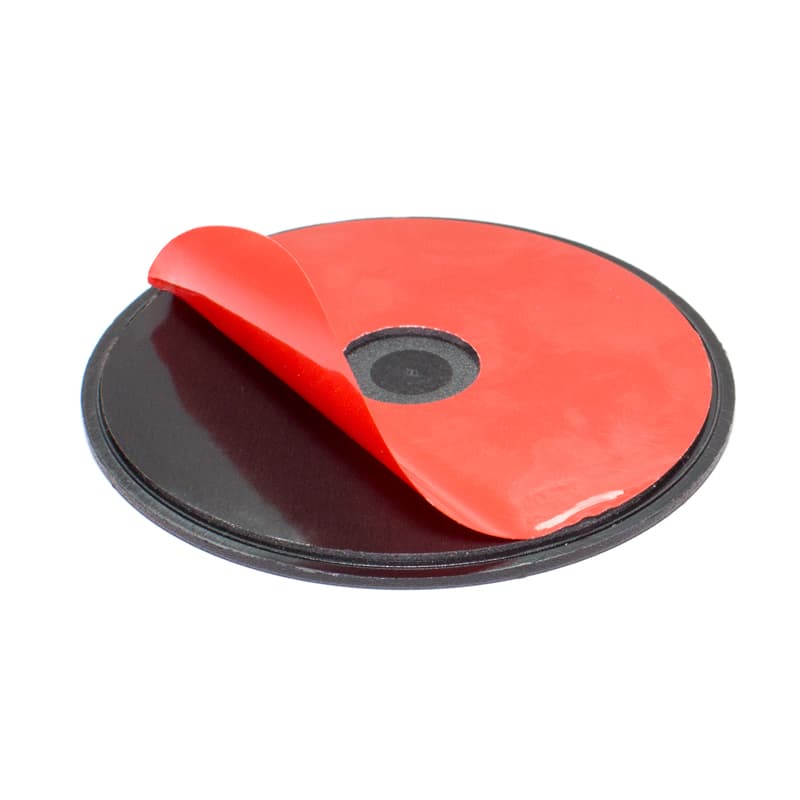
Arkon Adapter Plate - 90mm Dash Disk with 3M VHB Adhesive
Backed by heavy-duty 3M VHB adhesive, the APVHB20 is a 90mm disk that gives any 80mm windscreen suction pedestal — Arkon or third-party — a solid anchor point on your dashboard.
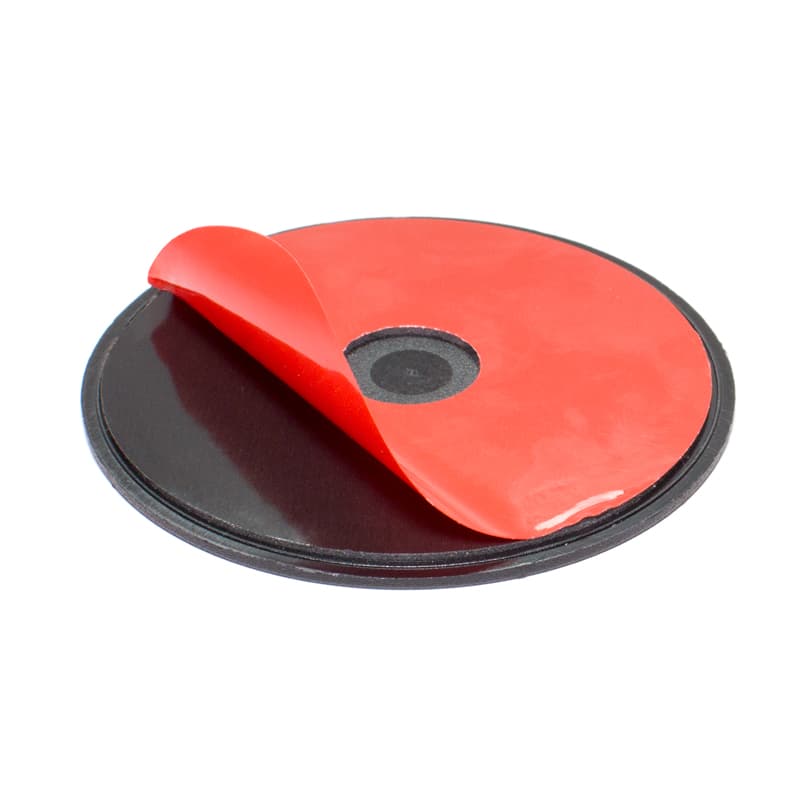
Arkon Adapter Plate - 80mm Dash Disk with 3M VHB Adhesive
The APVHB13 is an 80mm dash disk backed with extra-strength 3M VHB adhesive, giving any Arkon or third-party 70mm windscreen suction pedestal a solid anchor point on your dashboard for smartphones or Garmin GPS units.
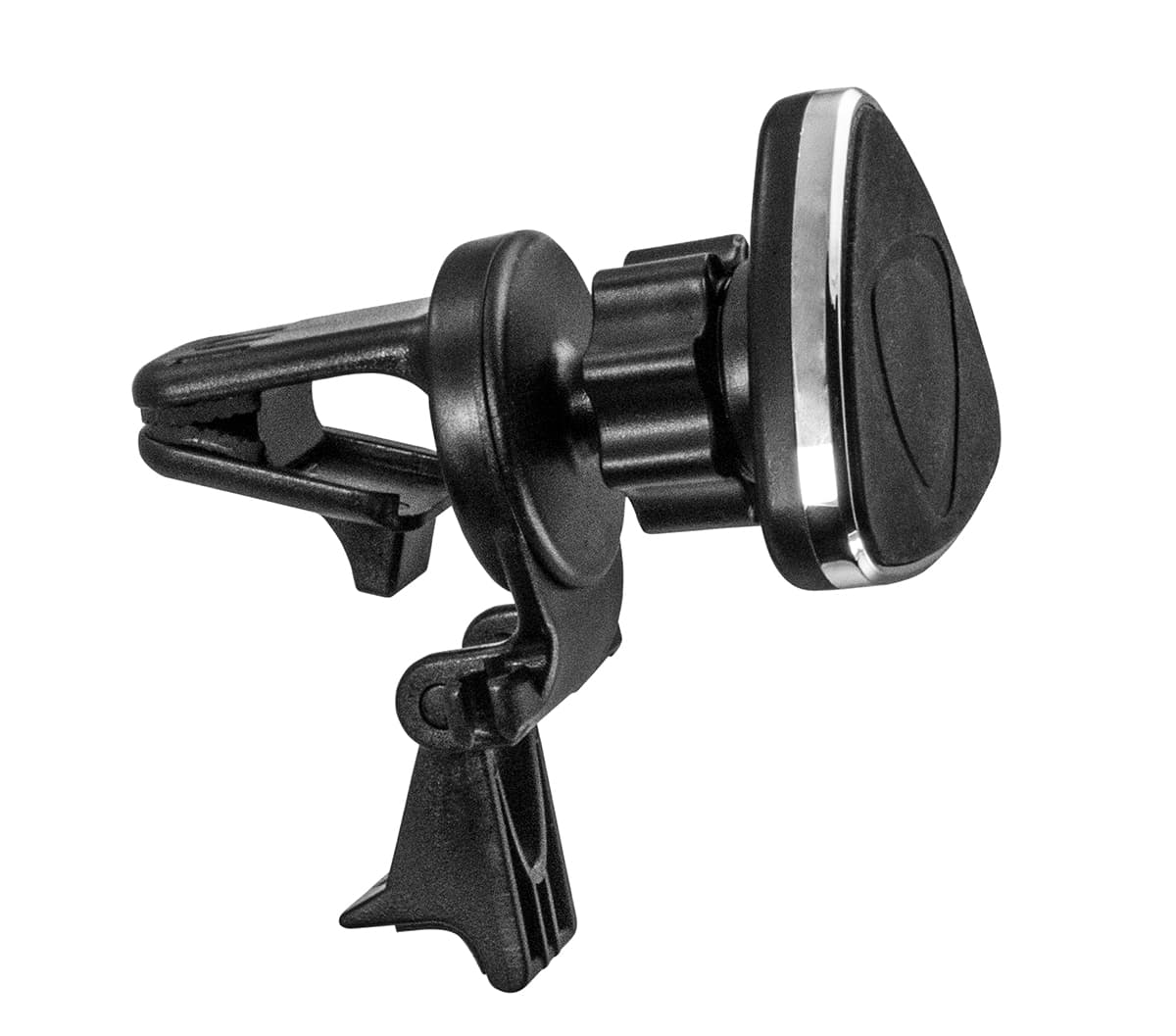
Arkon Phone Car Vent Holder Mount for iPhone
This magnetic mount holds phones and other devices firmly without any cradle or gripping arms. A one-piece spring-loaded clip with two cord catchers locks onto horizontal or vertical vent louvres, and a support leg braces against the bottom of the vent for extra stability. Backed by a 2 year limited warranty.
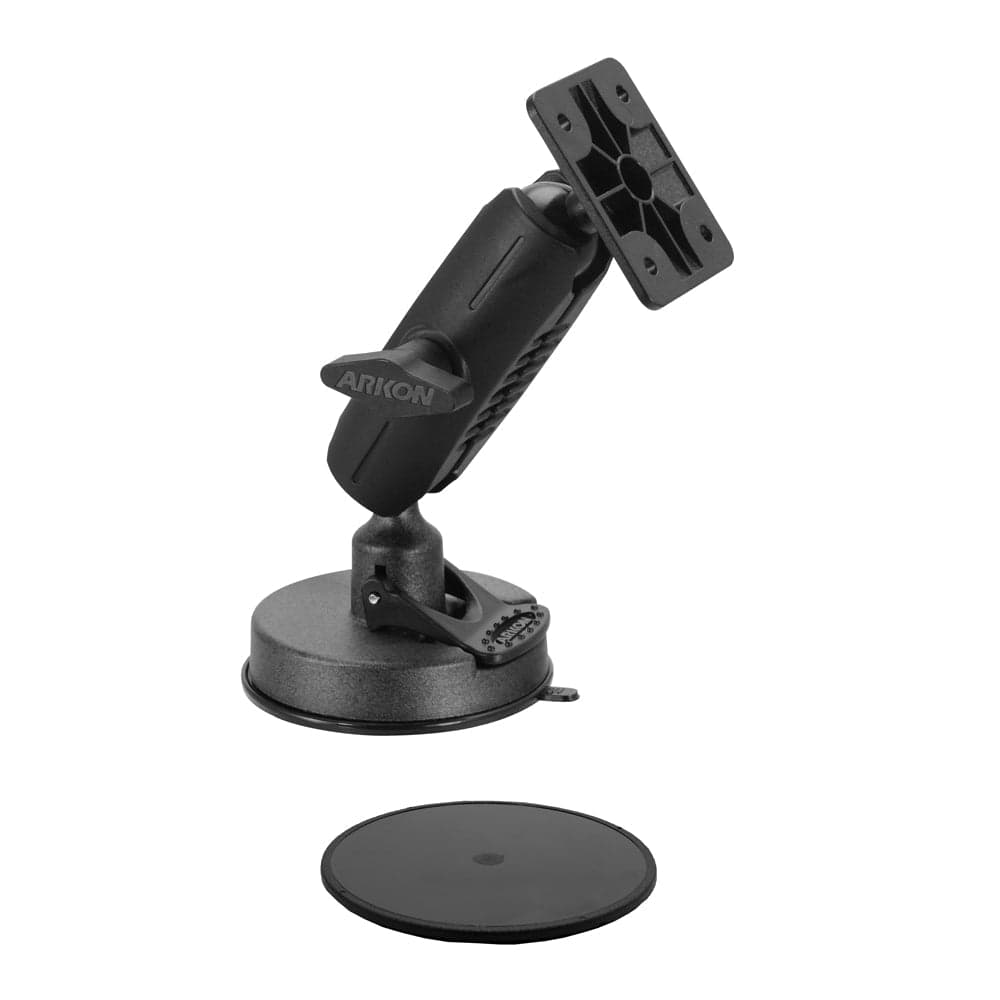
Arkon 80mm Sticky Suction Windshield or Dash AMPS Mount
Part of Arkon's Robust Mount Series, the RM079AMPS sticky suction mount fixes to your windscreen or dash and accepts any device with the industry-standard 4-Hole AMPS pattern. That includes cameras, GPS units, satellite radios and audio/video receivers.
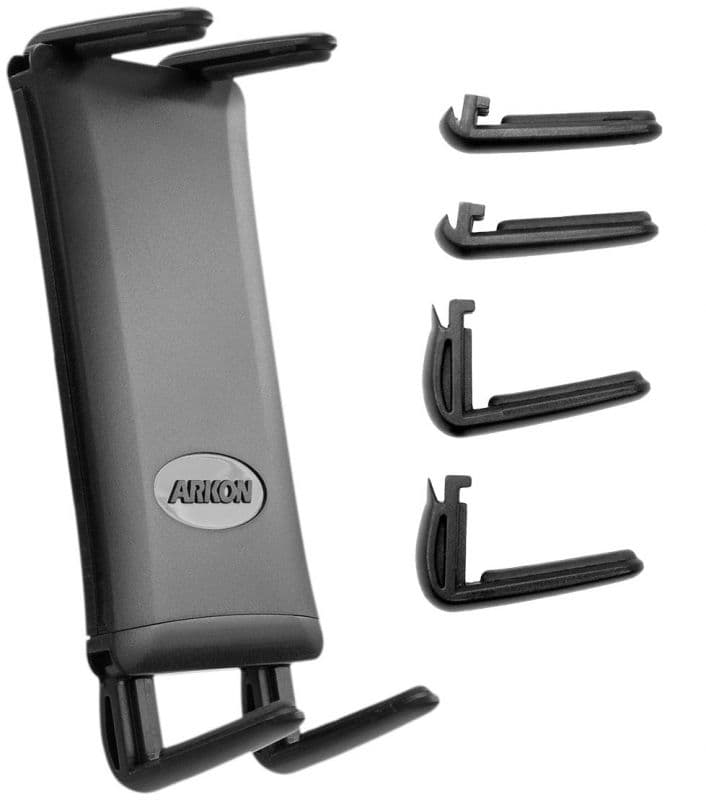
Arkon Slim-Grip Ultra Universal Spring-Loaded Smartphone Holder
The Arkon SM060-2 Slim-Grip Ultra is a universal cradle for smartphones and midsize tablets that pairs with any Arkon Dual T-Tab mounting pedestal. It takes any smartphone measuring up to 7.5" tall.
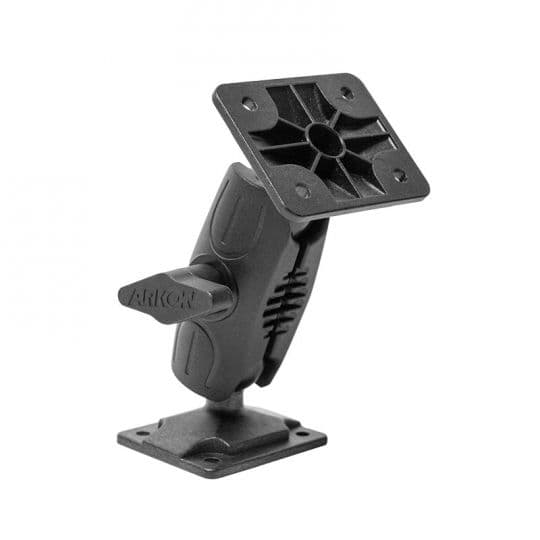
Arkon Robust Mount Small Series - MINI Shaft 4-Hole AMPS Drill Base to 4-Hole AMPS Mounting Pedestal
Part of Arkon's Robust Mount Series, the RMS2XAMPS pairs a 4-hole AMPS drill base with a 4-hole AMPS head on a short 4" arm. It's the pick when space is tight and you still want a solid, low-vibration mounting point.